

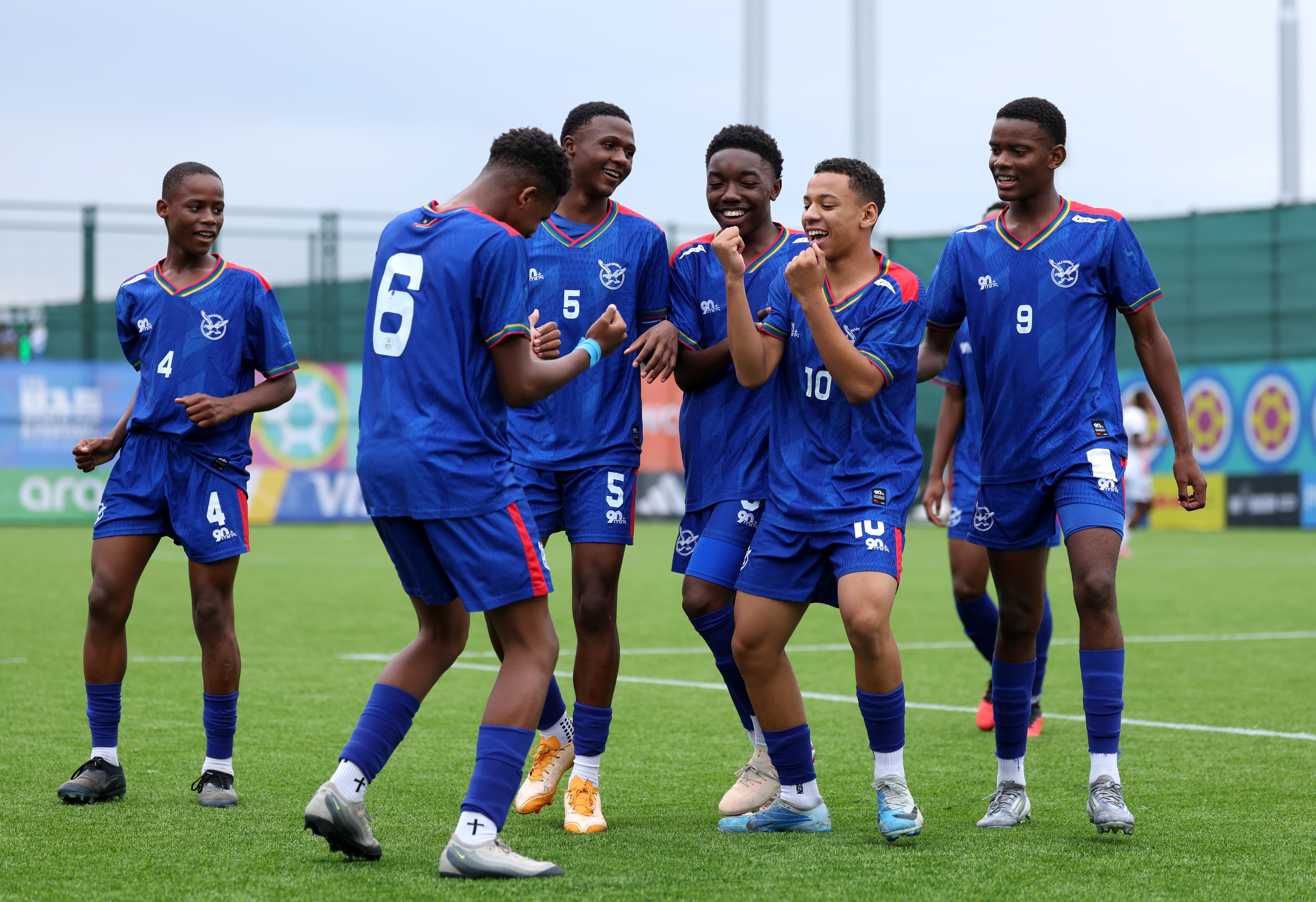
Namibia’s Under-15 boys’ national team continues to gain valuable international experience at the FIFA U-15 World Cup & Festival in Baku, Azerbaijan, despite consecutive defeats against Afghanistan and Tunisia.
The Baby Warriors suffered a 6–2 defeat against Afghanistan before falling 4–0 to Tunisia, with the results presenting important learning opportunities for the country’s first-ever team to compete at a FIFA World Cup event.
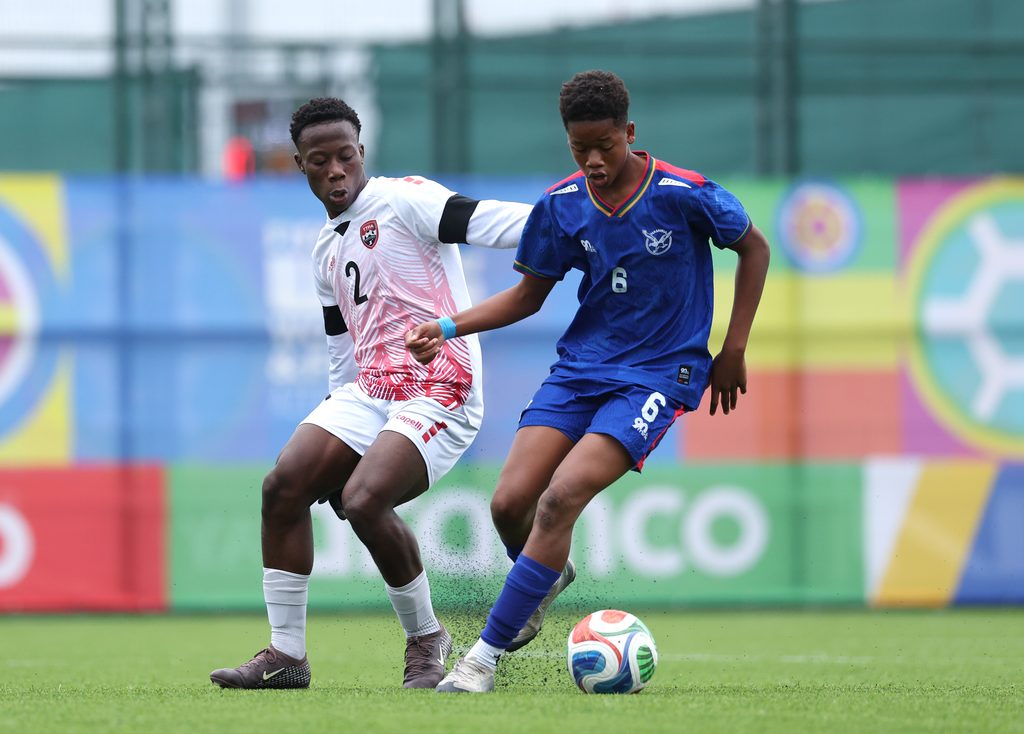
Despite the recent setbacks, Namibia’s campaign has been marked by an impressive start that showcased the potential of its talented group of 15-year-olds.
The young Namibians opened their tournament with an emphatic 8–0 victory over São Tomé and Príncipe before recording a 3–0 win against the British Virgin Islands, scoring 11 goals without conceding in their opening two matches.
They subsequently suffered a 5–0 defeat against Poland but demonstrated resilience by bouncing back to beat Bermuda 2–1, highlighting their ability to respond to setbacks against international opposition.
Against Tunisia, Namibia conceded all four goals in the first half but produced a determined attacking display after the break. The boys pushed forward in search of goals but were unfortunate not to find the back of the net.
Head coach Woody Jacobs described the tournament as a valuable opportunity for youth football development, emphasising the importance of exposing young players to international competition. Having started the tournament on a high, the boys have experienced the speed, intensity and tactical demands of football at this level.
Building for the Future
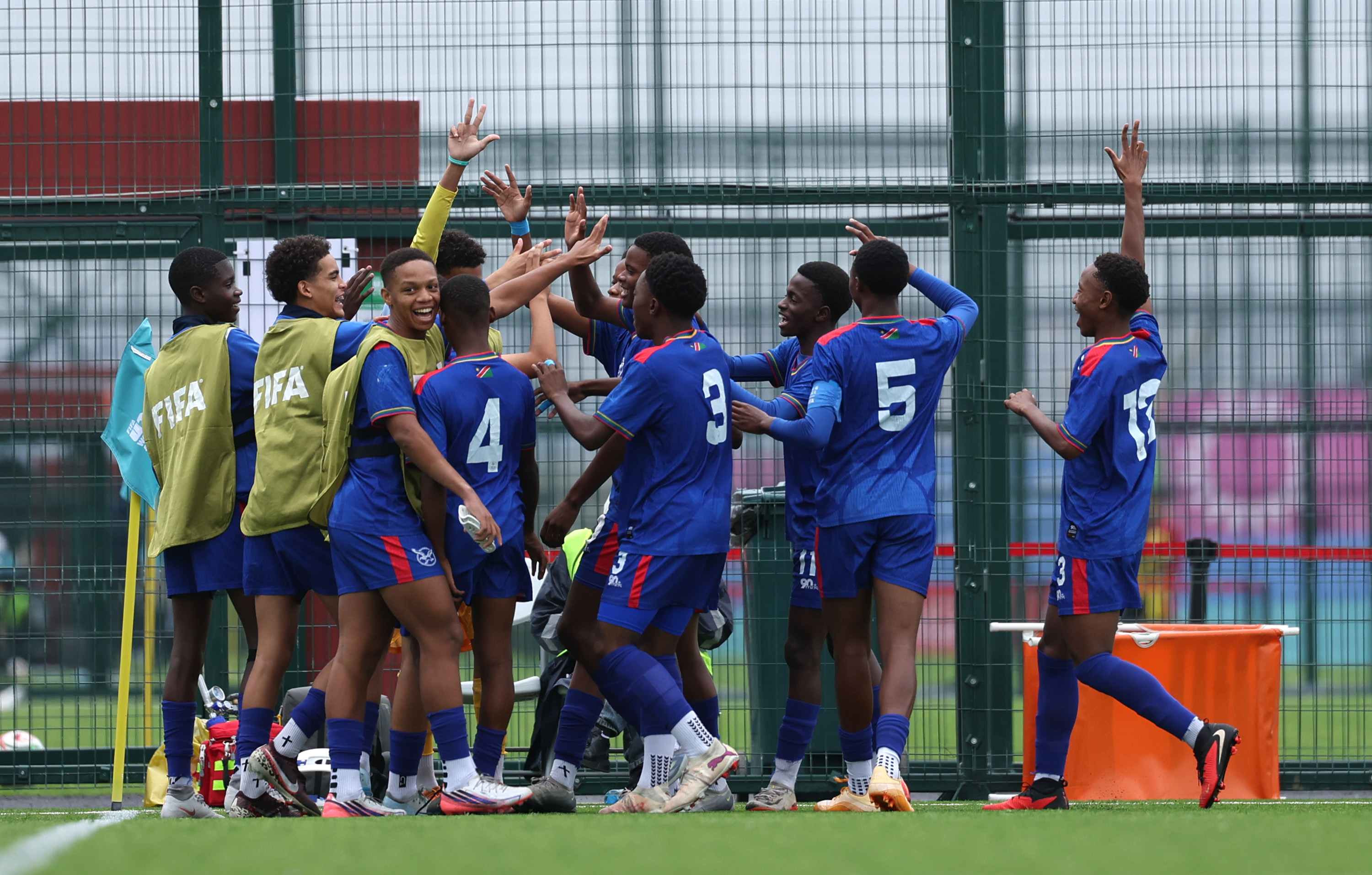
Beyond the results, Namibia’s participation represents an important milestone for youth football in the country.
The talented group has attracted attention from Namibian football experts, with strong calls for the Namibia Football Association to retain the core group and continue developing the players together.
With sustained investment and support, this generation could form part of Namibia’s U-17 national teams in 2027 and 2028, the U-20 teams between 2029 and 2031, and the next Olympic qualifying cycle, when the players would be approaching 20 years of age.
The tournament has provided an opportunity to assess the players against international opposition while giving them lessons that cannot easily be replicated at domestic level.